Pitbull: A Modern Handwritten Font for Digital Branding
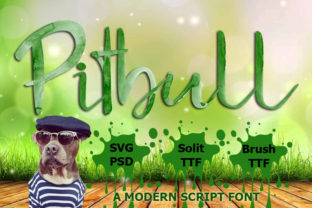
As a web designer who ships landing pages, SaaS dashboards, and conversion-optimized online stores, I reach for Pitbull when I need a Color Fonts solution that delivers personality without sacrificing digital clarity. Pitbull is a modern handwritten font — not a generic script, but a deliberate, expressive typeface built for impact in real-world interfaces. Its three distinct styles — SVG, brush, and solid — give me precise control over tone: playful yet professional, bold yet approachable, hand-crafted yet technically robust. And because Pitbull is an OpenType-SVG color font, it renders vibrant, layered glyphs natively in modern browsers — no workarounds, no raster fallbacks.
Pitbull for Hero Sections and High-Impact Website Headers
Pitbull shines brightest where attention is scarce: hero sections on landing pages, SaaS homepages, and product launch banners. Its striking style instantly creates visual hierarchy — guiding the eye to your core value proposition before the first sentence is read. Unlike static script fonts, Pitbull’s SVG and brush variants retain texture and depth at large sizes, making them ideal for full-width headers over gradient or image backgrounds. On mobile, I use the solid style for better readability at smaller breakpoints (32–48px), while reserving the SVG variant for desktop hero titles where color gradients and subtle ink bleed reinforce brand warmth. For accessibility, I pair Pitbull headlines with a clean, high-contrast sans serif like Inter or Manrope for body copy — ensuring WCAG-compliant contrast and scannability.
Pitbull for Online Store Banners and E-Commerce Product Titles
If you run a boutique online store — think handmade ceramics, indie skincare, or artisanal apparel — Pitbull transforms product banners from functional to emotionally resonant. As a Color Fonts asset, it supports rich, consistent color application across Shopify, WooCommerce, and Webflow banners without needing image assets. I use the brush style for limited-time offers (“Summer Sale — 30% Off”) and the SVG variant for collection headers (“Hand-Poured Candles”), where subtle gold or terracotta fills elevate perceived value. Crucially, Pitbull avoids the “craft fair cliché” of overused scripts — its letterforms have confident spacing, balanced x-height, and intentional irregularity that feels human, not haphazard. That authenticity builds trust faster than polished-but-impersonal sans serifs.
Pitbull for Coaching Websites and Service-Based Brand Identity
Coaches, consultants, and course creators need fonts that signal both expertise and empathy — and Pitbull delivers that duality. Its modern handwritten font character conveys approachability and creativity, while its technical precision (OpenType-SVG support, cross-browser consistency) reassures visitors they’re engaging with a credible, well-built digital experience. I deploy Pitbull selectively: for section headers (“What You’ll Learn”), testimonial pull quotes, and CTA buttons (“Start Your Free Session”). Not for paragraph text — this is a display font, not a workhorse. But used intentionally, it strengthens brand tone across every touchpoint: from email headers to LMS course modules to Canva social templates. For clients, that consistency means stronger recall and higher conversion lift on lead-gen pages.
Pitbull for Portfolio Sites and Creative Freelancer Branding
When your portfolio *is* your resume — whether you’re a UI designer, illustrator, or motion artist — typography becomes part of your signature. Pitbull functions as a quiet differentiator: a modern handwritten font that says “I care about craft” without shouting. I use the SVG style for project titles overlaid on case study thumbnails, the brush variant for “About Me” subheads, and the solid version for footer signatures or contact CTA bars. Because Pitbull is a Color Fonts file, I can match accent colors to my site’s palette exactly — no hex approximation, no export artifacts. And since it’s delivered as a standard font file (not an icon font or webfont kit), it integrates cleanly into Figma design systems and Next.js deployments alike.
Pitbull for Blog Headers and Editorial Digital Experiences
Even editorial sites benefit from strategic display typography — especially when standing out in crowded RSS feeds or newsletter previews. Pitbull works exceptionally well as a blog header font for lifestyle, wellness, or creative entrepreneurship blogs. Its rhythm encourages scanning: short phrases like “Your First 90 Days” or “Why Simplicity Wins” gain weight and warmth without slowing reading speed. I avoid using Pitbull for article titles longer than six words — it’s optimized for emphasis, not exposition. Instead, I pair it with a warm serif (like Literata) or neutral sans (like IBM Plex Sans) for body text, creating a clear typographic contract: Pitbull = voice, supporting font = clarity. This pairing performs equally well on dark-mode layouts, where Pitbull’s SVG fills remain legible against charcoal or navy backgrounds.
Pitbull for Branded Web Components and UI Kits
As a UI designer building reusable component libraries, I treat Pitbull as a purpose-built asset — not a decorative afterthought. Its three styles let me assign semantic meaning: SVG for primary CTAs (“Get Started”), brush for secondary actions (“See Examples”), solid for disabled states or microcopy (“Limited Spots Left”). Because Pitbull is a commercial font licensed for web use, I confidently embed it in client-facing dashboards, white-labeled SaaS tools, and digital brand kits. No licensing surprises — it covers websites, landing pages, online stores, and digital templates out of the box. And unlike many script fonts, Pitbull includes robust OpenType features and consistent glyph alignment, so it scales predictably across responsive breakpoints and dynamic UI containers.
Pitbull for Social Media Graphics and Cross-Platform Brand Consistency
Your Instagram story shouldn’t look like a different brand than your homepage — and Pitbull bridges that gap. As a Color Fonts solution, it ensures identical color, texture, and spacing whether rendered in Figma, Photoshop, or directly in Webflow’s text editor. I use Pitbull for quote cards, webinar banners, and product launch countdowns — always with the same SVG fill and stroke behavior. That fidelity matters: when followers see your font across platforms, they register cohesion, not fragmentation. For designers building digital brand kits, Pitbull isn’t just another Fonts download — it’s a consistency anchor. Pair it once, deploy everywhere, and reinforce tone without reworking assets.